
THE EVIDENCE, APPLIED · NUTRITION
Creatine,
considered.
What creatine monohydrate can do for strength, body composition and the brain, and where the claims run ahead of the evidence.
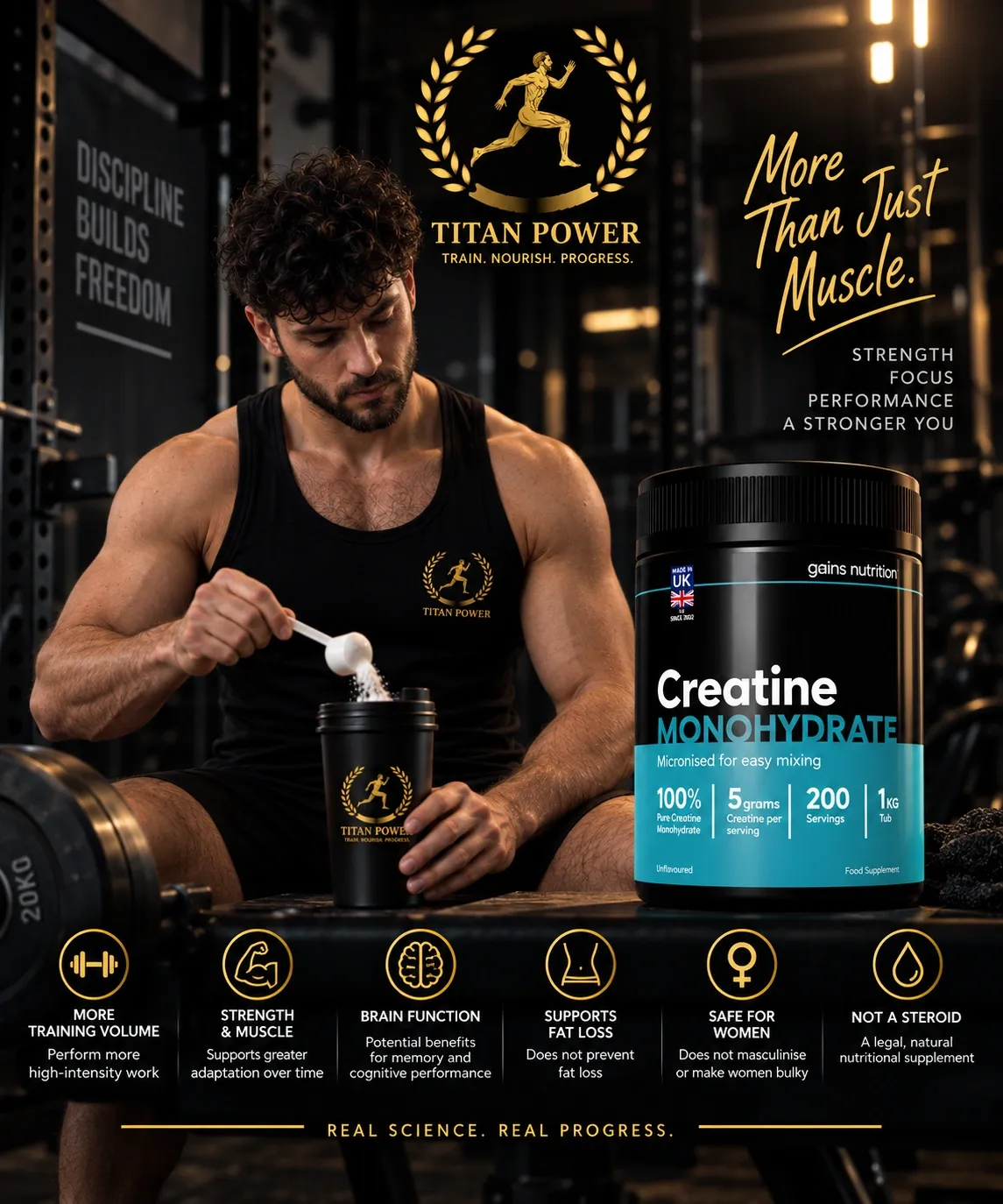
For a supplement with such a strong record in sport, creatine attracts an extraordinary amount of confusion. It is described as a steroid, a fat burner, a cause of bloating and a shortcut to a sharper brain. None of those descriptions is a useful basis for a decision.
The practical question is simpler: what is creatine likely to add to an already well-designed training and nutrition plan, and what should you expect to notice?
01 · THE SHORT ANSWER
Useful, with a clear purpose.
Creatine monohydrate increases the amount of creatine available in muscle. Its most established benefit is helping the body regenerate energy during repeated short, demanding efforts. For someone lifting weights, sprinting or performing other high-intensity work, that can make productive training easier to sustain across sets and sessions.1
It is a nutritional supplement, not an anabolic steroid. It does not replace progressive training, sufficient food, sleep or consistent coaching. Its role is to support the work, not do the work for you.
02 · STRENGTH & PERFORMANCE
Small margins, repeated often.
Creatine helps maintain phosphocreatine stores, which contribute to rapid ATP regeneration during hard muscular efforts. In practice, you may hold your performance a little better through later sets or complete a little more high-quality work. The effect is not a guaranteed dramatic jump on the first day.
That distinction matters. An extra repetition in one session is modest. A higher standard of work repeated over months, within a sensible programme, can be consequential. Creatine is most compelling when it sits alongside technique, appropriate loading, adequate protein and a plan that progresses with you.1
03 · BODY COMPOSITION
The scale is not the whole story.
Beginning creatine can increase body weight because higher muscle creatine stores are associated with more water in muscle. A change on the scale does not, by itself, indicate that you have gained body fat. It also does not mean that fat loss has stopped.1
If fat loss is your goal, judge the trend with more than a single weigh-in: waist measurements, training performance, photographs and how clothes fit can provide useful context. Creatine is not a fat burner. Its potential value during a calorie deficit is helping you preserve the quality of resistance training while nutrition creates the deficit.
It will not suddenly make women masculine or cause substantial muscularity without the training, time and nutrition required for muscle growth. The association of creatine with bodybuilding has often obscured its simpler role as a training aid.1
04 · COGNITION
Promising, still being tested.
The brain also uses the creatine-phosphocreatine system. A 2024 meta-analysis of 16 randomised trials involving 492 people reported an improvement in memory and some timed cognitive measures, while finding no significant effect on overall cognitive function or executive function. The authors judged the certainty of evidence to vary by outcome.2
Another systematic review was less persuaded by the overall cognitive evidence.3 For a busy professional, that means creatine should not be sold as a guaranteed focus supplement, a treatment for memory concerns or a substitute for sleep. Its training benefit is better established than its effect on cognition.
05 · PRACTICAL USE
Keep the decision simple.
Choose monohydrate
It has the strongest evidence and need not be expensive. A reputable, independently tested product is a sensible choice, particularly if you compete in a tested sport. A brand name alone does not make an equally pure dose more effective.4
Take it consistently
For many adults, 3–5 g daily is a practical starting point. Some research uses doses adjusted to total body mass, such as approximately 0.1 g/kg/day, but that is an option rather than a proven requirement for everyone. There is no validated maintenance formula based on fat-free mass.4
Loading is optional
A loading phase fills stores faster. A steady daily intake works too, over a longer period. Taking creatine on rest days and choosing a time you will remember matters more than a narrow post-workout window.
Controlled evidence in healthy people using conventional doses does not support the common claim that creatine damages kidneys. Creatine use can influence a blood creatinine reading, so tell your clinician if you take it. If you have kidney disease, are pregnant, take relevant medicines or have another significant medical concern, discuss supplementation with an appropriately qualified healthcare professional first.1
THE TAKEAWAY
Good decisions, no mythology.
Creatine monohydrate is one of the more useful additions to a serious strength programme. It can support repeated high-intensity work and may offer cognitive benefits in some circumstances, but it does not burn fat, change your hormones like a steroid or rescue an inconsistent programme. Use the evidence to set expectations, then let your own goals and response shape the plan.
Research sources
- Antonio J, et al. Common questions and misconceptions about creatine supplementation. JISSN, 2021.
- Xu C, et al. Creatine supplementation and cognitive function: systematic review and meta-analysis. Frontiers in Nutrition, 2024.
- McMorris T, et al. Creatine supplementation and cognition: a systematic review. Behavioural Brain Research, 2024.
- Kreider RB, et al. Bioavailability, efficacy, safety and regulatory status of creatine and related compounds. Nutrients, 2022.
This article explains general research, not individual medical advice. Reviewed and adapted for the London private coaching site from Alexandros’s longer creatine analysis.